FISHING
Look before you hook
Carbon and metal rods conduct electricity. Electricity North West advises fishing at least 30 metres horizontally from overhead lines, and setting up at the water's edge.
Check a distance doodlevolt
WHAT THE NETWORK OPERATORS SAY
Power lines cross fields, rivers and campsites all over the country.
Check a distance
ASSUMEit's live
They are easy to stop noticing. But a carbon fishing pole, a tent pole or a wet rope can carry a fatal current, and at high voltage electricity can jump a gap without anything touching the wire. UK network operators give simple distances to keep.
At a glance
400,000 V
Highest voltage on UK overhead lines
The Energy Networks Association says overhead lines carry from 230 volts, the voltage at home, up to 400,000 volts, and that high voltage electricity can jump large gaps.
VOLTAGE · ENA
≈ 40%
Reported ballooning accidents involving power lines
National Grid says almost 40% of reported ballooning accidents involve contact with overhead lines, and its engineers respond to hundreds of calls a year about public contact with lines.
BALLOONING · NATIONAL GRID
TWO NUMBERS WORTH KNOWING
One figure on what the lines carry,
one on what happens when people get too close.
National Grid also reports that approximately five people are killed every year in accidents involving overhead power lines during work on agricultural land.
A QUICK DISTANCE CHECK
Pick an activity to see the distance UK network operators advise from overhead power lines. The bar shows how big the gap is.
Distances from National Grid (electricity distribution) and Electricity North West safety advice. Local warning signs and instructions always come first.
THE SHORT ANSWER
Lines carry from 230 volts up to 400,000 volts.
Even domestic voltage can be fatal.
FISHING
Carbon and metal rods conduct electricity. Electricity North West advises fishing at least 30 metres horizontally from overhead lines, and setting up at the water's edge.
Check a distanceCAMPING
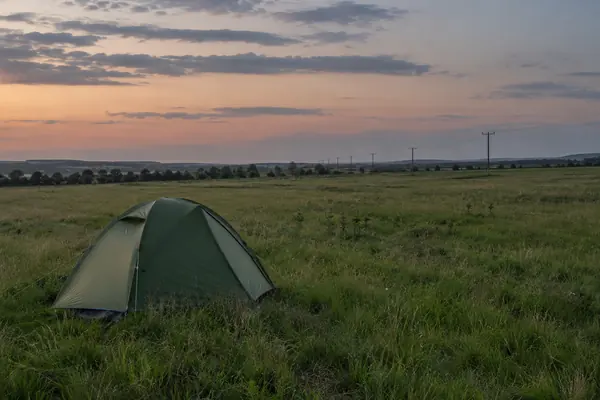
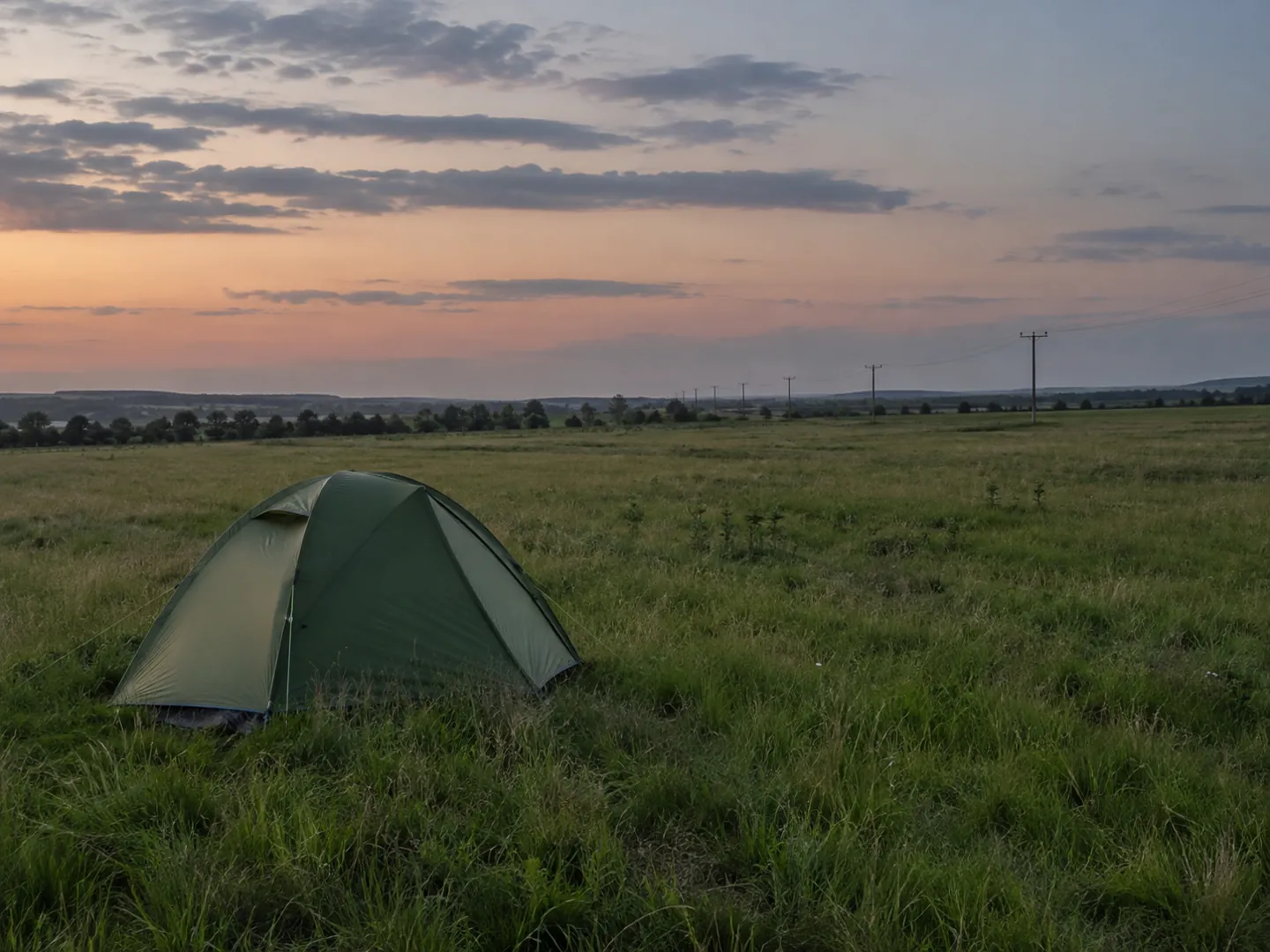
Leave at least six metres between power lines and the tent's highest point, and carry poles, aerials and flags horizontally.
Four habitsDRONES
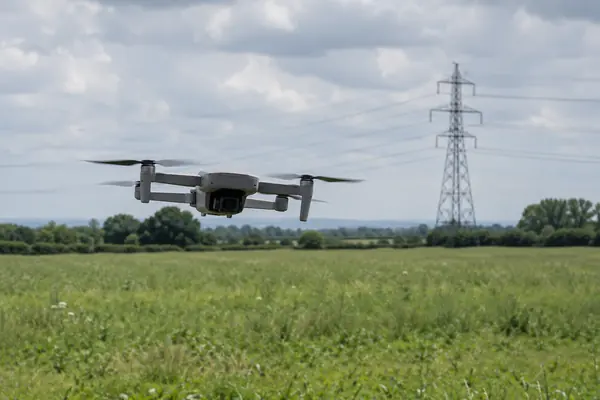
Fly more than 50 metres from substations and overhead lines. If a drone gets caught, do not try to retrieve it: call 105.
See the numbers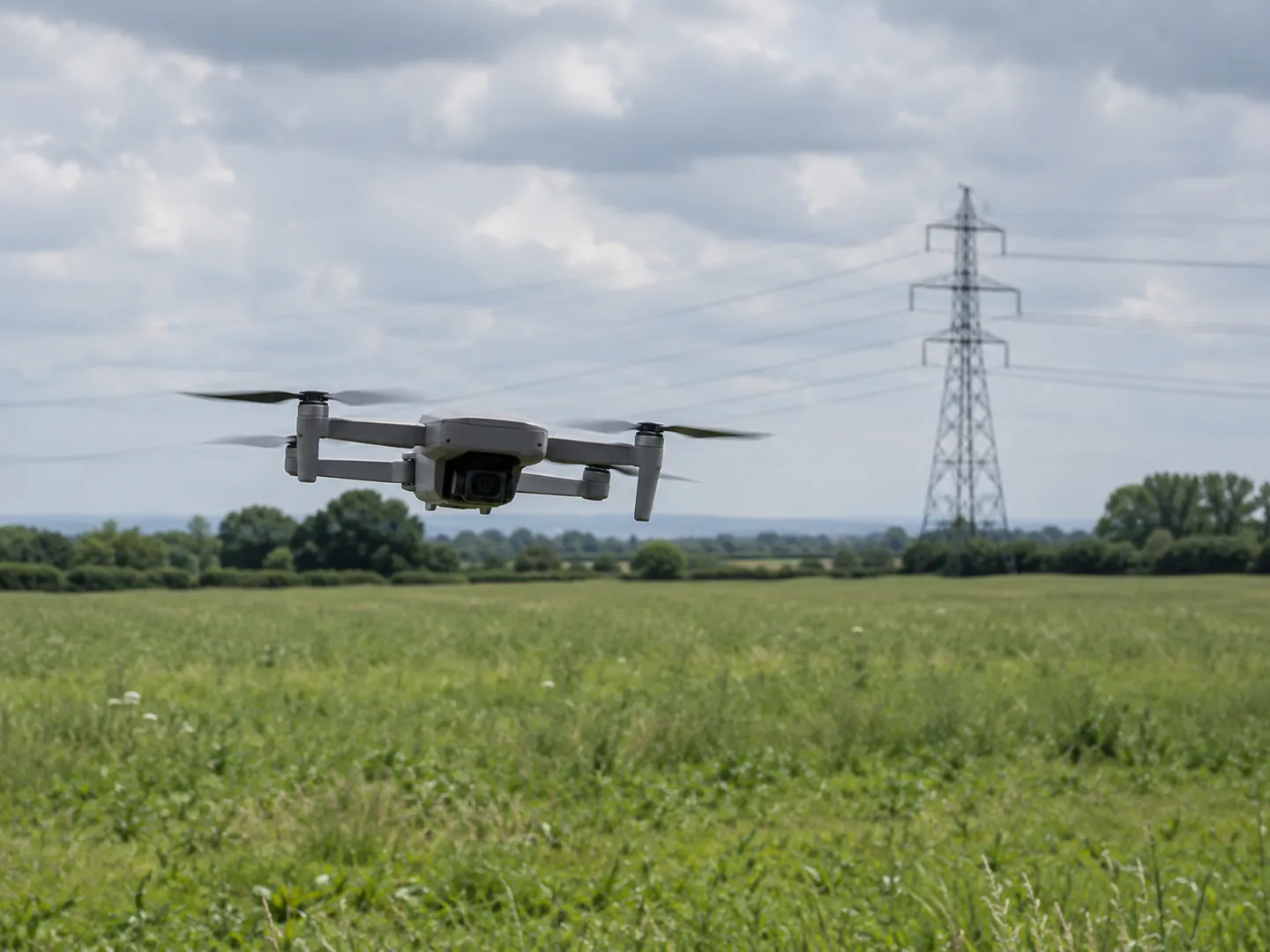
FOUR HABITS TO KEEP
These come from the network operators' leisure safety advice. They apply whether you are fishing, camping, sailing or flying.
Wooden-pole lines are easily mistaken for telephone wires. Assume any overhead line is a power line.
Unpack, set up and put away rods and masts at the water's edge, not on the walk from the car park.
Hold rods, poles, aerials and flags horizontally and parallel with the ground while you move them.
If fishing line, a drone or a boat touches a power line, stay away and call 105. In an injury, call 999 and do not touch the person.
IF SOMETHING TOUCHES A LINE
Electricity North West warns that anyone trying to rescue a person still in contact with or close to a line could also receive a fatal shock. Call 999, ask for an ambulance and for the local electricity network operator.
If a boat's mast touches a line, National Grid says anyone on board must stay on the boat: climbing out could be fatal. Report damaged lines or tangled fishing line on 105.
Questions
No. Network operators warn that at higher voltages electricity can jump short distances through the air, so getting close with a rod, pole or mast can be enough.
Electricity North West advises fishing at least 30 metres (100ft) horizontally away from all overhead lines, and not trying to estimate their height from the ground.
No. They can be mistaken for telephone wires but may carry electricity. Treat all overhead lines as live, and remember even domestic voltage can be fatal.
Call 105 to report damaged lines, or anything caught in them such as fishing line or a drone. In an emergency with someone injured, call 999.
No. National Grid advises at least six metres between the lines and the tent's highest point, and following any campsite signs that prohibit camping in certain areas.
Sources
ABOUT THIS NAME
doodlevolt.com is part of the DoodleSale portfolio. It isn't in an auction right now, but you can ask about leasing it.